Forms of Address
Diplomatic and foreign service forms of address
Foreign service officers below the rank of ambassador are generally addressed as "The Honorable [Full Name]" with their specific diplomatic title on the next line, and a personal "Dear Mr./Ms. [Last Name]:" salutation. Excellency is reserved for the most senior posts, like High Commissioner and Ambassador, rather than applied across the whole foreign service hierarchy.
Checked September 10, 2026/7 min read
Written by Claire PostReviewed against USPS Publication 28
What is on this page6 sections
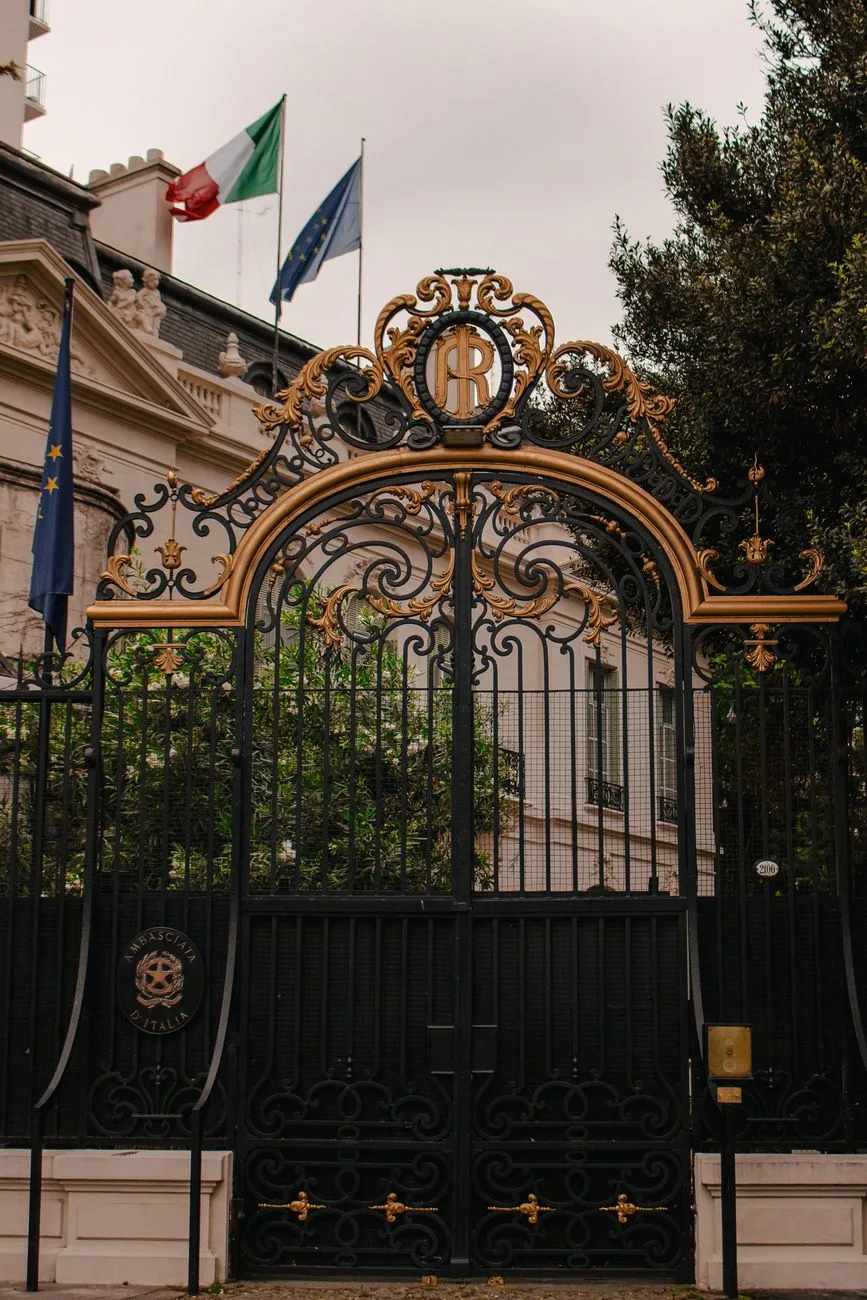
The foreign service has more working ranks than most people realize sit beneath “ambassador,” each with a real, specific title and its own place in an embassy hierarchy, from Chief of Mission down through the Secretary tiers.
The one rule that sorts most of the confusion: Excellency belongs to the most senior posts only. Everything else in the working foreign service uses The Honorable and a personal salutation, the same pattern as most other government titles on this site.
Step by step
Reserve Excellency for the most senior diplomatic posts
A High Commissioner (the Commonwealth-country equivalent of an ambassador) uses "His/Her Excellency," the same form used for a full ambassador. Most other foreign service titles below that rank use The Honorable instead.
THE HONORABLE DIANA C REYESCHIEF OF MISSIONEMBASSY OF THE UNITED STATES24 GROSVENOR SQUARELONDON W1K 6AH UNITED KINGDOMCorrectStandard envelope format for a Chief of Mission. Use The Honorable for the working diplomatic ranks
Chief of Mission, Deputy Chief of Mission, Counselor, and Consul all use The Honorable, plus their exact title, on the envelope, with a personal "Dear Mr./Ms. [Last Name]:" salutation.
Rank the Secretary tiers correctly
Second Secretary and Third Secretary are working foreign service ranks within an embassy, addressed the same way as Counselor: The Honorable, full name, exact title, personal salutation. Neither uses Excellency or a special office-based greeting.
Know that an Honorary Consul is a distinct, part-time role
An Honorary Consul is typically a local private citizen appointed to represent a country informal interests in a city without a full consulate, not a career foreign service officer. Address them as "The Honorable [Full Name], Honorary Consul of [Country]," with a personal salutation.
Quick reference
| Title | Envelope opens with | Salutation |
|---|---|---|
| High Commissioner | His/Her Excellency [Full Name] | Your Excellency |
| Chief of Mission | The Honorable [Full Name] | Dear Mr./Ms. [Last Name]: |
| Deputy Chief of Mission | The Honorable [Full Name] | Dear Mr./Ms. [Last Name]: |
| Consul | The Honorable [Full Name] | Dear Mr./Ms. [Last Name]: |
| Counselor | The Honorable [Full Name] | Dear Mr./Ms. [Last Name]: |
| Second / Third Secretary | The Honorable [Full Name] | Dear Mr./Ms. [Last Name]: |
| Honorary Consul | The Honorable [Full Name] | Dear Mr./Ms. [Last Name]: |
Special cases
The rule above covers most people. Here is what changes for the rest.
What is a Charge d Affaires?
An officer who leads an embassy temporarily in the ambassador absence, or a country diplomatic representative when no ambassador has been appointed. Address them as "The Honorable [Full Name], Charge d Affaires," with a personal salutation, the same pattern as a Chief of Mission.
How is a Permanent Representative to the UN addressed?
A Permanent Representative typically holds ambassador rank and is addressed the same way as an ambassador, "The Honorable [Full Name], Permanent Representative of [Country] to the United Nations," with "Dear Mr./Madam Ambassador:" as the salutation.
Is a Prime Minister or Governor General covered by this page?
Both are heads of government or heads of state in other countries rather than foreign service ranks, and each carries its own specific protocol form, generally His/Her Excellency for a Prime Minister and His/Her Excellency the Governor General for that office, distinct from the working diplomatic titles on this page.

Key terms on this page
- Excellency
- A formal diplomatic honorific reserved for the most senior posts, like an ambassador or High Commissioner, and heads of state or government.
- Chief of Mission
- The senior officer in charge of a diplomatic mission, generally an ambassador, though the specific title Chief of Mission is used administratively for the role itself.